

Video marketing has become non-negotiable for businesses in 2025. Whether you’re running a startup from your garage or managing a multinational corporation, video content drives engagement, conversions, and brand awareness like nothing else. But here’s the catch: creating quality video content has traditionally been expensive, time-consuming, and required specialized expertise.
Enter Veo 3, Google’s groundbreaking AI video generator that’s shaking up the entire video production landscape. But does it really deliver on the promise of being faster and cheaper than traditional methods? Let’s dive deep into the numbers, timelines, and practical realities that every business owner needs to know.
What is Veo 3?
Understanding Google’s AI Video Generator
Veo 3 is Google’s latest artificial intelligence-powered video generation tool that creates high-quality video content from text prompts. Released as part of Google’s expanding AI ecosystem, Veo 3 represents a significant leap forward in generative video technology. Instead of filming, editing, and producing videos the old-fashioned way, you simply describe what you want, and the AI generates it for you.
Think of Veo 3 as having a Hollywood production studio in your pocket, minus the million-dollar budget and six-month production timeline. The technology uses advanced machine learning models trained on vast amounts of video data to understand cinematography, lighting, motion, and storytelling.
Table of Contents
Key Features of Veo 3
Veo 3 comes packed with capabilities that would make traditional videographers jealous. It can generate videos up to several minutes long with consistent quality throughout. The system understands complex prompts, including specific camera angles, lighting conditions, and even emotional tones.
The AI maintains temporal consistency, meaning objects and characters don’t randomly morph or disappear between frames—a problem that plagued earlier AI video tools. Veo 3 also offers unprecedented control over styling, allowing businesses to maintain brand consistency across all generated content. From photorealistic corporate videos to stylized animated content, Veo 3 handles diverse visual requirements with remarkable flexibility.
Traditional Video Marketing: The Conventional Approach
How Traditional Video Production Works
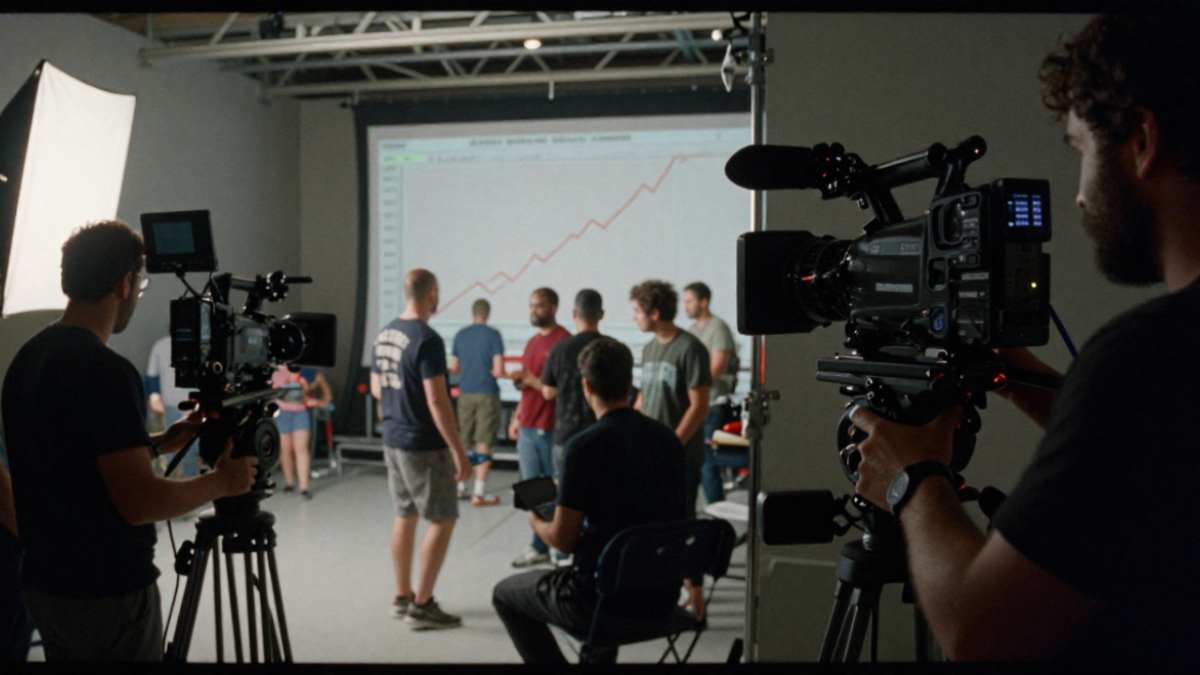
Traditional video marketing follows a well-established workflow that hasn’t changed dramatically in decades. It starts with concept development and scriptwriting, moves through pre-production planning, involves actual filming or animation creation, and concludes with extensive post-production editing.
Each phase requires specific expertise. You need writers, directors, camera operators, lighting technicians, sound engineers, actors or voice talent, and editors. For animated content, you’re looking at storyboard artists, animators, and motion graphics specialists. It’s a collaborative process that, while proven effective, demands significant coordination and resources.
Resources Required for Traditional Methods
Let’s be honest: traditional video production isn’t cheap. A professional-grade camera setup alone can run $5,000 to $50,000. Add lighting equipment, audio gear, and editing software subscriptions, and you’re looking at substantial capital investment before you’ve shot a single frame.
Then there’s the human element. Professional videographers charge $1,000 to $5,000 per day. Editors might bill $75 to $150 per hour. Actors, voice talent, and specialized crew members all add to the bottom line. Even for a simple 60-second promotional video, businesses often spend $3,000 to $10,000 when going the traditional route.
Cost Comparison: Veo 3 vs Traditional Video Marketing
Upfront Investment Differences
Here’s where Veo 3 starts showing its disruptive potential. Traditional video production requires significant upfront investment in equipment, software licenses, and often retaining an agency or production team. You’re looking at thousands of dollars before production even begins.
Veo 3, by contrast, operates on a subscription or usage-based model through Google’s platform. While exact pricing varies based on usage tiers, businesses can start generating videos for a fraction of traditional costs. There’s no equipment to purchase, no crew to hire, and no studio space to rent. The barrier to entry drops from several thousand dollars to potentially less than a hundred.
Ongoing Production Costs
Equipment and Software Expenses
Traditional video marketing involves continuous expenses. Cameras need maintenance and eventual replacement. Software subscriptions for editing suites like Adobe Premiere or Final Cut Pro run $20 to $50 monthly. Storage for high-resolution video files requires robust hard drives or cloud solutions, adding hundreds more annually.
Veo 3 eliminates these ongoing equipment costs entirely. Your investment is purely in the platform access, with no physical infrastructure to maintain or upgrade. As Google improves Veo 3‘s capabilities, users automatically benefit from updates without additional expenditure.
Personnel and Labor Costs
Labor represents the biggest cost difference between Veo 3 and traditional methods. A single corporate video might require 40+ hours of professional time when you factor in pre-production, shooting, and editing. At professional rates, that’s $3,000 to $6,000 in labor alone.
With Veo 3, one person with clear creative vision can generate multiple video variations in hours, not days. The cost shifts from expensive specialized labor to either internal staff time or much lower-cost AI operation fees. For businesses producing regular video content, this difference multiplies significantly across dozens or hundreds of videos annually.
Time Efficiency: Speed to Market Analysis
Traditional Video Production Timeline
Traditional video production is inherently sequential and time-intensive. A typical project timeline looks like this: concept development (3-7 days), scriptwriting (2-5 days), pre-production planning (5-10 days), shooting (1-3 days), and post-production editing (7-14 days). We’re talking about 3-6 weeks minimum for a relatively straightforward marketing video.
Need revisions? Add another week or two. Want to create multiple versions for different audiences? Multiply that timeline accordingly. Seasonal campaigns require planning months in advance to ensure content is ready when needed. This lengthy timeline creates inflexibility that can be devastating in fast-moving markets.
Veo 3 Production Speed
Veo 3 operates on an entirely different timescale. From prompt to finished video can take minutes to hours rather than weeks. Creating a 60-second promotional video might involve 15 minutes crafting the perfect prompt, 10-20 minutes for generation, and another 30 minutes reviewing and making adjustments.
What traditionally took six weeks now happens in a single afternoon. This compression of timeline isn’t just convenient—it’s strategically transformative. Businesses can respond to market trends, competitor moves, or viral moments with video content while they’re still relevant. Veo 3 enables a level of agility that traditional methods simply cannot match.
From Concept to Completion
Let’s walk through a real-world scenario. Your company launches a new product tomorrow, and you need a promotional video today. With traditional production, you’re out of luck unless you planned months ago. With Veo 3, you describe the product, specify the desired style and messaging, generate the video, review it, make adjustments, and have final content ready within hours.
This speed advantage becomes even more pronounced when creating content variations. Testing different messages, visuals, or calls-to-action means generating multiple versions. Traditional production might allow for 2-3 variations given budget and time constraints. Veo 3 lets you create 10, 20, or more variations to identify what resonates best with your audience.
Quality Considerations in Video Marketing
Production Value Comparison
Quality remains a crucial consideration. Traditional video production, when done well, offers unmatched production value. Real actors convey authentic emotion. Physical products shot on professional cameras show texture and detail that AI still struggles to perfectly replicate. Complex human interactions and subtle performances remain areas where traditional filming excels.
Veo 3 produces impressive results that have improved dramatically from earlier AI video tools. For many business applications—explainer videos, product demonstrations, background footage, and conceptual content—Veo 3 delivers perfectly adequate and often excellent quality. The gap between AI-generated and traditionally produced video continues narrowing with each iteration.
When Traditional Methods Still Win
Certain scenarios still favor traditional production. High-stakes brand campaigns where every detail matters, content featuring real company executives or team members, videos requiring specific physical products to be filmed, and content where authentic human connection is paramount—these situations often warrant traditional production investment.
Veo 3 and AI video generation work best for scalable content needs: social media videos, multiple variations for testing, quick-turnaround campaign responses, educational or explainer content, and scenarios where visual concept matters more than photographic perfection. Smart businesses assess each project’s specific requirements rather than declaring one method universally superior.
Scalability and Volume Production
Creating Multiple Videos with Veo 3
Here’s where Veo 3 truly shines: scalability. Need 50 videos for a comprehensive content calendar? Traditional production would require massive budget and time investment. With Veo 3, you’re looking at days rather than months, and costs measured in hundreds or low thousands rather than tens of thousands.
This scalability unlocks entirely new marketing strategies. Personalized video content for different customer segments becomes feasible. Weekly or daily video updates transform from impossible to routine. A/B testing with multiple video variations shifts from luxury to standard practice. Veo 3 doesn’t just make video production cheaper and faster—it makes volume production practical for businesses of all sizes.
Limitations of Traditional Scaling
Traditional video production scales poorly and expensively. Doubling your video output roughly doubles your costs and timeline. Production companies have finite capacity, meaning ramping up production often requires engaging multiple vendors, which introduces consistency and coordination challenges.
The economics of traditional production create a ceiling on how much video content most businesses can reasonably produce. Veo 3 essentially removes that ceiling, limited primarily by the time required to conceptualize and prompt the AI rather than physical production constraints.
Skill Requirements and Learning Curves
Expertise Needed for Traditional Production
Traditional video production demands specialized skills acquired through years of training and experience. Operating professional cameras, setting up proper lighting, capturing clean audio, directing talent, and editing footage all require expertise that most business professionals don’t possess.
This skill gap means businesses typically outsource video production or hire dedicated staff—both expensive options. Even with internal resources, maintaining cutting-edge skills requires ongoing training as techniques and technologies evolve.
Accessibility of Veo 3 for Non-Technical Users
Veo 3 dramatically lowers the skill barrier. While crafting effective prompts involves a learning curve, it’s measured in hours or days rather than years. Anyone who can clearly articulate their vision in writing can operate Veo 3 with basic training.
This democratization of video production means marketing managers, content creators, and small business owners can generate video content directly without intermediaries. The time from idea to execution shrinks, and creative control remains entirely in-house. Veo 3 doesn’t eliminate the value of creative expertise, but it removes technical barriers that previously made video production inaccessible.
Flexibility and Iteration Capabilities
Making Changes with Traditional Videos
Traditional video production creates significant friction around revisions. Want to change the background color? Requires re-shooting or complex digital compositing. Need different messaging? Might require complete re-editing. Major changes can mean starting over entirely, incurring full production costs again.
This inflexibility forces businesses to get everything right upfront, which is challenging when testing new markets or iterating based on feedback. The cost and time penalty for mistakes or refinements discourages experimentation and iteration—precisely what modern marketing demands.
Quick Adjustments with AI-Generated Content
Veo 3 makes iteration trivial. Adjusting a visual element, changing messaging, or creating variations for different platforms requires only prompt modifications and regeneration. Testing different approaches costs minutes rather than thousands of dollars.
This flexibility encourages experimentation. Instead of committing to a single creative direction and hoping it works, businesses can rapidly test multiple approaches, measure performance, and refine based on data. Veo 3 enables true agile marketing where video content evolves continuously based on results rather than remaining static after significant upfront investment.
Real-World Business Applications
Small Business Use Cases
Small businesses face the steepest barriers with traditional video production. Limited budgets make professional video seem unattainable. Veo 3 changes this equation entirely. A local restaurant can create weekly special promotions, a boutique can showcase new inventory arrivals, and a consultant can produce educational content series—all without breaking the bank.
For small businesses, Veo 3 represents the difference between having video marketing and not having it at all. The cost and complexity of traditional production often relegates small businesses to still images and text, putting them at a disadvantage against larger competitors. Veo 3 levels that playing field.
Enterprise-Level Implementation
Large enterprises benefit differently but no less significantly. While enterprises have budgets for traditional production, they face challenges around speed, volume, and localization. Global companies need content variations for different markets, languages, and cultural contexts—multiplying production costs exponentially.
Veo 3 enables enterprise-scale content operations that were previously impractical. Creating localized versions of campaigns, producing content for dozens of product lines, maintaining consistent output across multiple divisions—these scenarios benefit enormously from Veo 3‘s cost structure and speed advantages.
ROI Analysis for Different Business Sizes
Return on investment varies significantly based on business size and video volume needs. For small businesses producing 5-10 videos monthly, Veo 3 might save $15,000 to $30,000 monthly compared to traditional production—often the difference between having video marketing or not.
Mid-size companies creating 20-50 videos monthly could see savings of $50,000 to $100,000 monthly while dramatically increasing output volume. These savings directly impact marketing ROI, allowing reinvestment in distribution, advertising, or other growth initiatives.
Enterprises producing hundreds of videos monthly face even more dramatic savings, potentially millions annually. Beyond direct cost savings, the speed and flexibility advantages of Veo 3 create strategic value that’s harder to quantify but equally important—faster time to market, more testing capability, and greater marketing agility.
Hybrid Approaches: Combining Both Methods
Smart businesses aren’t necessarily choosing between Veo 3 and traditional production—they’re combining both strategically. High-impact brand campaigns might warrant traditional production’s polish and authenticity, while Veo 3 handles ongoing content needs, testing variations, and rapid-response marketing.
This hybrid approach maximizes strengths of both methods. Use Veo 3 for volume, speed, and experimentation. Reserve traditional production for scenarios where its unique advantages justify the investment. Many businesses find this combination delivers better overall results than committing entirely to one approach.
Consider using Veo 3 to rapidly prototype concepts before committing to traditional production, or using AI-generated backgrounds and environments with real actors filmed on green screen. The tools complement each other when applied thoughtfully.
Future Implications for Video Marketing Budgets
The emergence of Veo 3 signals a broader shift in how businesses should think about video marketing budgets. Rather than allocating most budget to production, the balance shifts toward strategy, distribution, and measurement. When production becomes cheap and fast, success depends more on what you create and how you use it than on production value alone.
This shift has significant implications for marketing teams. Budget previously locked in production costs becomes available for advertising, influencer partnerships, or other distribution channels. Teams can afford to experiment more, fail faster, and iterate toward success rather than betting heavily on single high-production campaigns.
As Veo 3 and similar tools improve, the definition of “good enough” quality rises while costs fall. This creates opportunity for businesses willing to embrace new approaches and risk for those clinging exclusively to traditional methods.
Making the Right Choice for Your Business
So which approach makes sense for your business? The answer depends on your specific situation, goals, and constraints. Consider these factors: volume of content needed, budget availability, timeline requirements, quality expectations, internal capabilities, and strategic importance of video to your overall marketing.
Businesses producing high volumes of content on limited budgets with quick turnaround needs will benefit most immediately from Veo 3. Companies where brand perception depends heavily on production polish might adopt more gradually, using Veo 3 for certain content types while maintaining traditional production for flagship campaigns.
The key is approaching this as a strategic decision rather than a purely tactical one. Veo 3 isn’t just a cheaper, faster way to do what you’re already doing—it enables entirely new approaches to video marketing that weren’t previously feasible.
Conclusion
Veo 3 represents a genuine paradigm shift in video marketing economics. The cost and time advantages over traditional production aren’t incremental improvements—they’re order-of-magnitude changes that fundamentally alter what’s possible for businesses of all sizes. Where traditional production might cost $5,000 and take six weeks, Veo 3 delivers comparable results for hundreds of dollars in hours or days.
These advantages unlock new strategies: volume content production, rapid iteration, real-time marketing responses, and personalized video at scale. While traditional production retains advantages in specific scenarios, Veo 3 makes video marketing accessible and practical for businesses that previously couldn’t justify the investment.
The businesses that will win in this new landscape aren’t necessarily those with the biggest budgets, but those that most effectively leverage these new tools to create, test, and deploy video content faster and more strategically than their competitors. Veo 3 doesn’t just reduce costs—it removes barriers that limited how businesses could use video marketing.
FAQs
1. Can Veo 3 completely replace traditional video production for my business?
For many businesses, Veo 3 can handle the majority of video needs, but complete replacement depends on your specific requirements. If you need videos featuring real company employees, require absolute photographic accuracy for products, or produce high-stakes brand campaigns where every detail matters, traditional production still has a place. Most businesses benefit from a hybrid approach where Veo 3 handles volume content needs while traditional production is reserved for special circumstances.
2. How much can I realistically save using Veo 3 instead of traditional video production?
Savings vary based on your current spending and volume needs, but businesses typically save 70-90% on per-video costs. If you’re currently spending $5,000 per video and producing 10 videos annually ($50,000 total), you might reduce that to $5,000-$15,000 annually with Veo 3 while actually increasing output. Small businesses often save enough to justify having video marketing for the first time, while enterprises can save hundreds of thousands or millions annually.
3. What’s the learning curve for someone with no video production experience to use Veo 3 effectively?
Most users become reasonably proficient with Veo 3 within a few days of experimentation. Unlike traditional video production which requires years to master camera work, lighting, and editing, Veo 3 primarily requires clear communication of your creative vision through text prompts. The skill is more about knowing what you want and describing it effectively than technical production knowledge. Basic competency comes quickly, though mastering advanced prompting techniques for optimal results takes longer.
4. Does Veo 3 work for all types of business videos, or are there limitations I should know about?
Veo 3 excels at certain video types: explainer videos, product demonstrations, conceptual content, backgrounds and environments, and stylized or animated content. It faces limitations with content requiring specific real people, videos needing exact product detail reproduction, complex human interactions requiring nuanced performance, and situations where viewers expect authentic documentary-style footage. Understanding these strengths and limitations helps you deploy Veo 3 where it’s most effective.
5. How does video quality from Veo 3 compare to professionally produced traditional video?
Veo 3 quality has reached impressive levels suitable for most business applications, especially social media, web content, and internal communications. For many viewers, AI-generated content is indistinguishable from traditional production. However, trained eyes may notice differences in certain scenarios, and ultra-high-end brand campaigns still benefit from traditional production’s polish. The gap continues narrowing with each generation of AI technology. For 80-90% of business video needs, Veo 3 quality is more than adequate and often excellent.